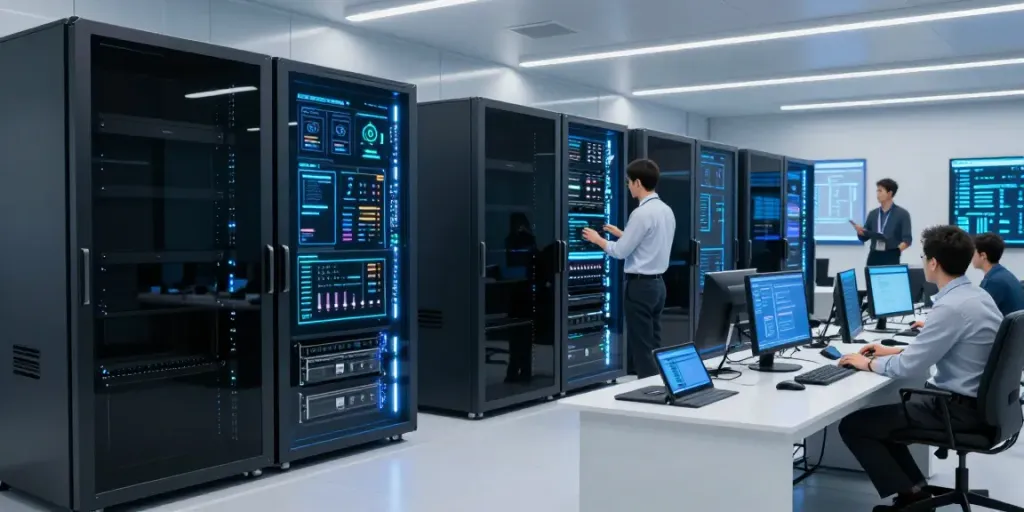
Understanding AI Data Center Architecture
The rise of artificial intelligence (AI) has introduced a new paradigm in computing and data processing, necessitating a more specialized form of infrastructure known as AI data center. These facilities are uniquely designed to support the demanding requirements of AI applications, from training models to deploying scalable services. Unlike traditional data centers that rely predominantly on CPU-based resources, AI data centers leverage high-density GPU configurations optimized for parallel processing, which is crucial for handling vast datasets and complex computational tasks.
What Components Make Up an AI Data Center?
AI data centers are composed of several critical components that work together to ensure efficient operations:
- High-Performance Computing Units: At the heart of any AI data center are GPUs and specialized chips designed for machine learning, such as TPUs (Tensor Processing Units). These components enable rapid data processing and model training.
- Storage Solutions: AI workloads often require immense storage capacities to hold large datasets. High-speed SSDs (Solid-State Drives) are essential to facilitate quick access and retrieval of data during training and inference phases.
- Networking Infrastructure: The ability to efficiently transfer large volumes of data between computing units is paramount. High-bandwidth, low-latency network interfaces ensure that communication bottlenecks are minimized.
- Power Management Systems: Effective power management ensures that AI data centers can operate at optimal efficiency while meeting the intensive energy demands of GPU workloads.
- Cooling Systems: With the substantial heat generated from high-density computing, advanced cooling systems are necessary to maintain ideal operational temperatures, preventing hardware failures and maintaining performance.
How AI Workloads Influence Design Choices
The specific nature of AI workloads significantly impacts the design and architecture of data centers. For instance, while traditional data centers might focus on balancing CPU resource utilization, AI data centers need to prioritize GPU performance and parallel processing capabilities. This drives a need for configurations that can handle simultaneous tasks across many GPUs, leading to innovations in load balancing and resource allocation strategies.
Comparing Traditional Data Centers and AI Data Centers
Understanding the distinctions between traditional and AI data centers is crucial for businesses looking to invest in AI capabilities:
- Resource Allocation: Traditional data centers often optimize for general-purpose computing with a mix of CPUs and storage. In contrast, AI data centers are heavily invested in GPUs, which are better suited for heavy computational tasks associated with AI applications.
- Performance Metrics: Traditional data centers focus on metrics such as uptime and latency. AI data centers, however, also emphasize throughput and processing speed, given the high-volume data analysis they perform.
- Energy Consumption: AI data centers typically have higher energy demands due to the processing power required by GPUs. Effective power management and renewable energy solutions become essential to mitigate costs and environmental impacts.
Power Management in AI Data Centers
Effective power management is one of the most significant challenges and opportunities within AI data centers. As artificial intelligence workloads become more demanding, the necessity for reliable and efficient power systems is more pronounced than ever.
Why Electricity is Critical for AI Operations
The cornerstone of successful AI data center operations is consistent and efficient electricity supply. Every task executed by AI models, from data ingestion to inference, relies on vast amounts of electrical power. The integration of renewable energy sources can help meet this high demand while minimizing environmental footprints.
Strategies for Effective Power Allocation
To maximize efficiency and reduce costs, AI data centers implement several strategies for power allocation:
- Dynamically Adjusting Power Supplies: Implementing AI-driven systems to manage power supply based on real-time workloads can lead to significant cost savings.
- Multi-Phase Power Distribution: Utilizing multiple stages of power distribution allows for a more granular approach to energy delivery, ensuring that only the necessary power is consumed by each component.
- Utilizing Energy Storage Systems: Integrating energy storage solutions enables data centers to draw on stored energy during peak demand periods, lessening the strain on power sources.
Monitoring Energy Use in AI Infrastructure
Ongoing monitoring and analysis of energy consumption patterns is essential for identifying inefficiencies. The use of advanced energy management software can provide insights into real-time usage and help optimize power distribution across the data center.
Participating in the AI Token Economy
As AI technologies continue to develop, the concept of a token economy emerges, enabling users and companies to participate in the value generated by AI infrastructures. In this ecosystem, individuals can contribute to and benefit from AI data center operations.
How to Get Involved in AI Tokenization
Participation in the AI token economy involves engaging with platforms that allow users to support AI infrastructures. By choosing an AI Infrastructure Power Plan, individuals can play a vital role in supporting the electricity and computing resources required by AI factories.
Rewards Systems for Contributors in AI Data Centers
The rewards system within AI data centers is structured to provide incentives for those who contribute their power or resources:
- Token-Metered Services: Participants can earn tokens based on the power they contribute, which directly correlates to the success and efficiency of AI workloads.
- Dynamic Reward Calculations: Contributors receive rewards calculated from real-world performance metrics—ensuring transparency and fairness in the distribution based on actual use.
- Long-Term Engagement Options: Various participation plans allow for flexible commitment periods, catering to different levels of involvement.
Case Studies of Successful Participation
Numerous organizations have successfully navigated the AI token economy, leveraging their contributions for measurable rewards. For instance, companies that invested in GPU resources during peak AI application expansion have seen substantial returns on their investments, further incentivizing the continued growth of AI data centers.
Best Practices for Managing AI Workloads
Effective management of AI workloads not only enhances performance but also ensures sustainability within an AI data center. Here are some best practices to consider:
Optimizing Performance Through Infrastructure Design
Designing infrastructure with scalability and flexibility in mind is crucial. Optimized configurations, such as modular data center designs, can help accommodate future growth and technological advancements.
Scaling AI Operations with Demand-Based Approaches
Utilizing scalable architectures allows organizations to match their resources with demand dynamically. This approach minimizes wasted resources and ensures that energy consumption aligns with workload requirements.
Challenges and Solutions in AI Workload Management
Several challenges persist in managing AI workloads, including:
- Resource Competition: As AI applications proliferate, contention for resources can hinder performance. Implementing scheduling algorithms can help prioritize tasks effectively.
- Energy Costs: High energy demands can lead to escalating operational costs. Adoption of energy-efficient hardware and renewable energy sources can mitigate this issue.
- Data Management: The volume of data can overwhelm existing systems. Developing robust data management frameworks is essential for maintaining workflow efficiency.
Future Trends in AI Data Centers
The landscape of AI data centers is continuously evolving, influenced by technological advancements and market demands. Here are key trends to watch for in 2026:
Predictions for AI Data Center Developments in 2026
Experts predict that AI data centers will increasingly embrace hybrid infrastructures, combining on-premises and cloud capabilities to enhance flexibility and performance. This shift will enable organizations to optimize costs and resources more effectively.
The Role of Sustainability in AI Infrastructure
With growing concerns regarding climate change, sustainability will play a pivotal role in the future of AI data centers. Increased adoption of renewable energy, coupled with energy-efficient technologies, will be essential to create environmentally responsible facilities.
Innovations Shaping the Future of AI Processing
Emerging technologies, such as quantum computing and neuromorphic chips, promise to revolutionize how AI workloads are processed. These innovations could potentially deliver unprecedented performance enhancements and efficiency gains.
What Are the Largest AI Data Centers in the US?
As AI demand surges, some of the largest AI data centers in the US are scaling operations to meet this need. Facilities in regions with abundant renewable energy resources, such as the Pacific Northwest, are particularly well-positioned for future growth.
How to Choose the Right AI Data Center?
Choosing the right AI data center requires careful consideration of several factors, including:
- Location: Proximity to energy sources and low-latency networks can enhance performance.
- Energy Efficiency: Opt for facilities that prioritize sustainable energy practices and energy-efficient technologies.
- Scalability: Ensure that the data center can grow with your organization's needs and adapt to technological advancements.
What Are the Common Security Risks in AI Data Centers?
While AI data centers offer immense potential, they are not without risks. Common security threats include data breaches, unauthorized access, and supply chain vulnerabilities. Implementing robust cybersecurity measures and regular audits is essential to mitigate these risks.
What Role Do Renewable Energy Solutions Play?
Renewable energy solutions are becoming increasingly integral to AI data center operations. Facilities that utilize solar, wind, or hydroelectric power not only reduce their carbon footprints but also capitalize on tax incentives and long-term cost savings.
Can AI Data Centers Reduce Operational Costs?
By adopting energy-efficient technologies, optimizing power management, and leveraging renewable energy, AI data centers can significantly lower operational costs. Additionally, utilizing advanced analytics can enhance resource allocation and workload efficiency.